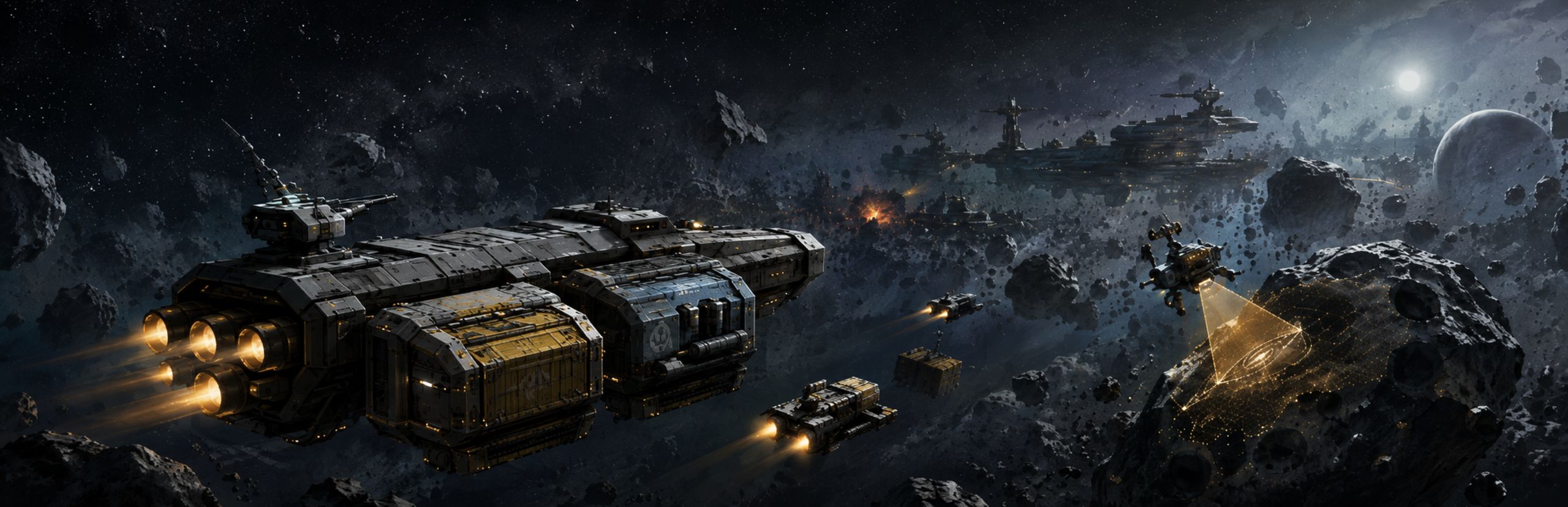
The base moves
There is no traditional base building in Deepfield. Your industrial infrastructure is a fleet.
Capital ships carry the systems that keep that fleet alive: refining, manufacturing, storage, crew facilities, scanning, weapons and support. Every hull has limited capacity, so building a fleet means deciding what each ship is for and what capabilities you are willing to leave behind.
Your base does not sit safely at the edge of the map. It travels with you.
The economy is physical
Resources are not numbers in a global stockpile.
Ore has to be extracted, refined, stored and transported. Components, fuel and ammunition have to physically reach the ships that need them. Shuttles move cargo between vessels, and every transfer creates time, distance and vulnerability.
Where something is matters as much as how much of it you have.
Progression is geographical
New capability comes from finding and exploiting new materials.
The asteroid belt is not a uniform resource field. Different deposits require different scanners, mining systems and refining equipment, and more advanced materials unlock new hulls, modules and industrial options.
Progression means pushing farther into the belt, locating what your fleet needs next, and building the infrastructure required to use it.
Combat closes the loop
War consumes the output of your economy.
Weapons need ammunition. Ships need repairs. Lost hulls, vehicles, equipment and crew have to be replaced using the same resources that could have been spent expanding the fleet.
A battle can be won and still leave you strategically weaker.
Deepfield is not about building an economy beside a war. The economy exists to sustain the fleet, and the fleet exists in a world that keeps giving you reasons to spend it.